
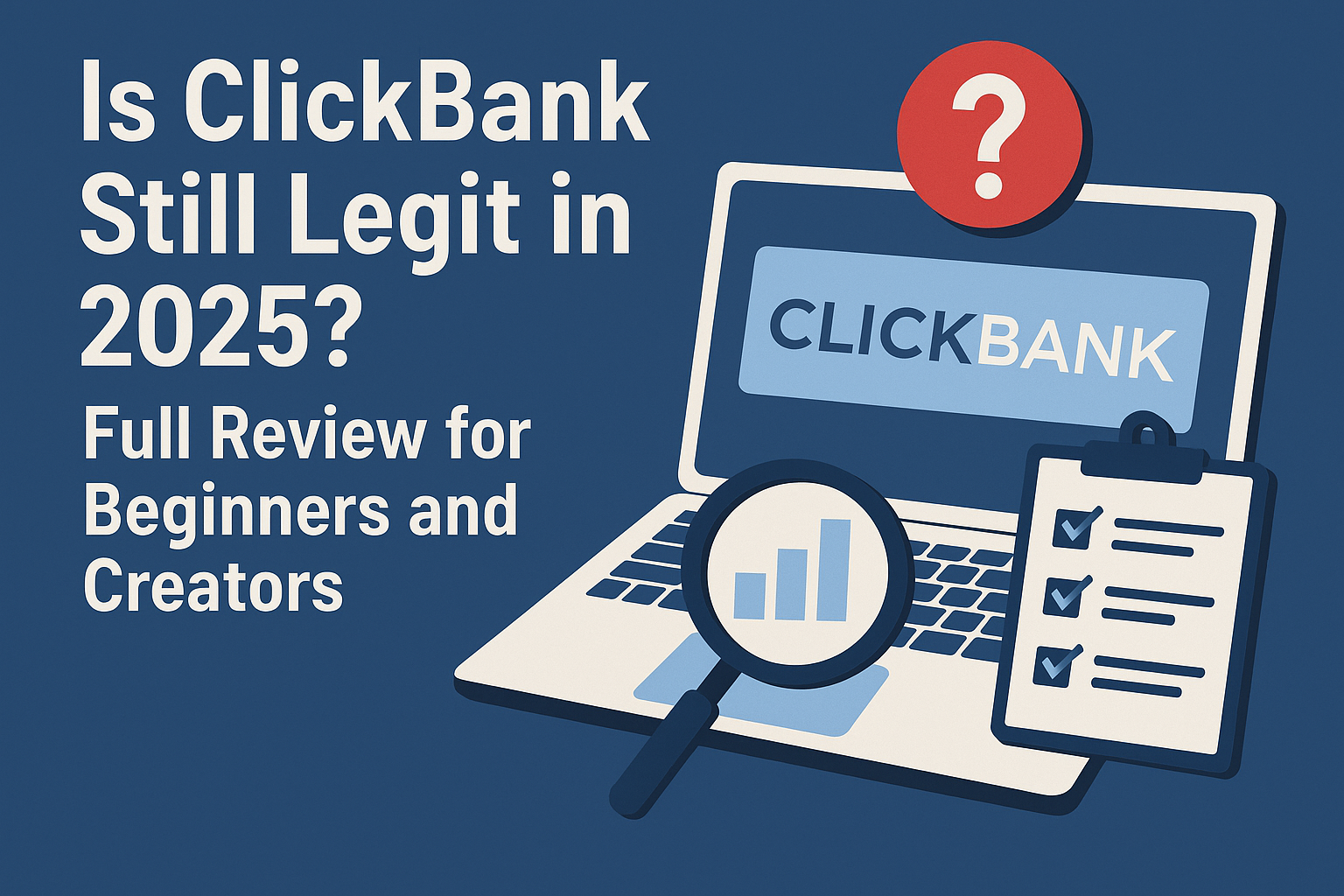
How Clickbank Works Takeaway- ClickBank works by linking digital product creators with affiliates who promote them for a commission. Affiliates grab unique tracking links (HopLinks), send traffic to offer pages, and earn when sales happen. It’s free to join, easy to start, and backed by secure, on-time payouts.
ClickBank Review 2025: Legit Marketplace or Overhyped Platform?
If you’ve been poking around for ways to make money online, you’ve probably stumbled across ClickBank. Perhaps you’ve come across YouTube gurus promising “easy affiliate profits.” I did too, and, out of curiosity, I tried a few offers last year just to see what would happen. Some results surprised me… mostly in good ways, though a couple of lessons came the hard way.
I do have a caution for you, before falling for guru hype and spending money you shouldn’t, read this guide and try it on your own for free.
So, what exactly is ClickBank? In plain terms, it’s a giant marketplace where people sell and promote digital products, such as e-books, courses, software, and memberships, earning commissions on every sale. It connects product creators (called vendors) with affiliates (that’s you, if you choose to promote).
People are searching for a ClickBank review in 2025 because the platform has evolved. There are new tools, a growing education wing, and better analytics. Moreover, the online business landscape has shifted towards AI, short-form content, and tighter ad policies, raising the question: Is ClickBank still legitimate?
In this guide, I’ll cover how ClickBank works, its pros and cons, what’s new in 2025, and a simple plan to get started without getting lost.
Quick verdict: ClickBank is a legit marketplace with tons of digital offers. But your results depend entirely on what you choose and how you market it.
What Is ClickBank? Is It Legit in 2025?
ClickBank is, at its core, a 25+ year-old affiliate marketplace that connects product creators and marketers around the world. It handles payment processing, tracking, and even taxes, so neither side has to worry about the messy back-end stuff.
It’s open to almost anyone with no complex approval process, no minimum audience required. That’s part of what makes it beginner-friendly.
Can you trust it? Yes, ClickBank is legit. They’ve been paying affiliates on time for decades and have a solid reputation for reliability. The platform serves millions of customers globally, across categories like health, finance, software, self-improvement, and more.
Still, some skepticism is fair. The quality of offers varies widely, and some vendors overpromise. The marketplace can also feel crowded, especially in “hot” niches like weight loss or crypto. So, while it’s a real platform with real payouts, it’s not magic. You’ll need to research offers carefully and test your marketing angles.
A simple affiliate path looks like this:
- You find a product you like in the marketplace.
- You grab a special tracking link (called a HopLink).
- You send visitors to that product’s page.
- When someone buys, ClickBank tracks it and pays you your commission.
That’s the basic cycle. It’s very simple, but success ultimately depends on your traffic and the choice of offers.
Quick Snapshot: History and Reputation
- Founded in the late 1990s, it is one of the longest-running digital affiliate networks.
- Known for reliable payouts and a straightforward onboarding process.
- Has served millions of affiliates and customers across nearly every niche imaginable.
- Longevity matters — it signals stability, support systems, and trust.
It’s rare in this industry for a company to stick around for over two decades. ClickBank has done that while maintaining a consistent payout record. This is a big reason many affiliates keep using it after trying other platforms.
How ClickBank Makes Money and Why That Matters
ClickBank’s business model is simple. Vendors (product creators) pay a small fee to list their offers and set commission rates for affiliates. ClickBank earns a cut from these transactions.
For affiliates, that means your commissions come from the vendor’s set rate — not from ClickBank taking a slice of your payout. The platform also handles payment processing, refunds, and compliance support.
Why does this matter? Because you can focus on promoting and selling, not bookkeeping or managing chargebacks. It’s one of those behind-the-scenes perks that new affiliates often overlook until they try running sales manually elsewhere.
Who ClickBank Is For, and Who Should Skip It
ClickBank fits people who like experimenting and building things online, like bloggers, YouTubers, email marketers, or anyone with a niche audience. It’s also great for vendors who sell e-books, training courses, or software tools.
But if you only want to promote physical products (like Amazon-style retail) or if marketing and testing sound exhausting, it might not be your best fit.
In short: ClickBank rewards patience, content, and consistency.
How ClickBank Works: Affiliates, Vendors, and Buyers
The flow is simple but powerful.
- Sign up as an affiliate or vendor (free and quick).
- Browse the marketplace for offers or categories.
- Get your HopLink (your unique tracking link).
- Promote through content, ads, or email.
- Earn commissions when someone buys.
- ClickBank handles payments and refunds.
Everything runs through one dashboard with basic analytics and sales data.
For Affiliates: Find Offers and Get Your HopLink
- Create your account and complete your profile.
- Explore the marketplace by category; look at “Gravity,” commission rate, and average earnings.
- Review the product’s landing page. Does it look trustworthy? Would you buy it?
- Copy your HopLink, and add tracking tags if needed.
- Start small — one niche, one offer — and learn the process.
Tip: pick something you understand or already talk about online. Promoting random diet pills or crypto schemes rarely ends well.
For Vendors: Launch, List, and Support Affiliates
If you’re on the creator side, you’ll:
- Package your product (e-book, video course, software).
- Set commission rates and create affiliate tools (banners, emails).
- Submit your listing for ClickBank review.
- Go live in the marketplace.
- Support your affiliates — quick answers make a big difference.
The better your offer page and materials, the faster affiliates will jump on board.
Payments, Refunds, and Taxes: What to Expect
ClickBank processes all payments automatically. Affiliates can choose weekly or biweekly payouts once they hit a small threshold.
Refunds happen, especially with digital goods — so don’t panic when you see one. Focus on improving your funnel and matching expectations. Taxes are handled through built-in workflows; you’ll still report income, but the platform takes care of the compliance structure.
Pro tip: Track net earnings, not just gross sales.
Key Terms You’ll See on Offer Pages
- Commission rate: Your percentage per sale.
- Average earnings: Past results and not a promise.
- Recurring: Monthly subscription payouts.
- Resources: Vendor-provided promo tools.
- Refund window: Impacts your long-term earnings.
ClickBank Pros and Cons You Should Weigh First
Let’s be honest with ourselves! ClickBank isn’t perfect. But few platforms are.
Pros: Big Marketplace, Fast Setup, Real Education
- Thousands of digital products across nearly every niche.
- Easy signup — no approval hoops.
- Built-in payment system and tracking.
- Education tools like Spark and Accelerator for beginners.
- Trusted brand with a long, consistent history.
Cons: Competition, Varying Quality, Refund Risk
- Popular niches get crowded fast.
- Product quality varies — some gems, some not so great.
- Refunds can be higher for digital items.
- Learning curve for traffic and conversions.
- Testing takes time and patience.
Who Wins With ClickBank, Who Struggles
Those who win? Content creators who publish regularly, build email lists, and test.
Those who struggle? People are chasing trends or copying others without a real strategy.
Middle ground: Try one product in one niche for 30 days. Then decide if it fits your workflow.
What’s New in 2025: Spark, Accelerator, and Top Offers
ClickBank has quietly leveled up over the past few years. The most significant updates now center on education, automation, and community.
Spark by ClickBank: Learn Faster, Earn Sooner
Spark is ClickBank’s training platform with free and paid courses. Over 1.3 million learners have used it so far. The key difference? It’s structured and current. Instead of random YouTube advice, you get tested strategies.
If you’re new, start with one Spark Free course, finish it, and apply what you learn before chasing new tools or spending money you do not need to invest right away.
Accelerator: Build Funnels and Campaigns Without Guesswork
Accelerator helps affiliates and vendors set up landing pages and email sequences with proven templates. It shortens the “tech headache” phase.
My advice: launch a basic version first, collect some data, then tweak. Perfection kills momentum.
Monthly Top Offers: Research Shortcuts You Can Use
ClickBank’s Top Offers blog highlights the best-performing products each month. You can spot trends, check commission rates, and track refund patterns.
Don’t copy what others do; create your own original content. You can use tools like RightBlogger for this. Instead, use these reports as a research shortcut. Keep a small spreadsheet of what you test.
Community Support: Get Answers, Share Wins
Spark members also get access to an active Discord group, which is great for Q&A, feedback, and motivation. You’ll see people share first sales, troubleshoot pages, or swap feedback on funnels. That kind of community keeps you moving when motivation dips.
How To Start and Win on ClickBank: A Simple Plan
Here’s the practical part, along with a simple plan to follow this week.
Pick the Right Product: A Quick Checklist
- Real demand (search volume, social buzz).
- Clean sales page and believable promise.
- Commission that fits your traffic costs.
- Low refund rate and good reviews.
- A vendor that supports affiliates.
Copy This Simple Funnel
- Send traffic to a short pre-sell page.
- Use one significant benefit, one proof point, one clear CTA.
- Collect emails — send a 5-part follow-up.
- Warm them up before linking to the main offer.
- Track everything — even a few clicks tell a story.
Traffic: Free First, Paid Later
- Free: blog posts, YouTube reviews, Reddit threads, or newsletters.
- Paid: Google search ads, YouTube pre-roll, social ads.
- Start small, one channel only. Measure click-to-lead, not just views.
- Reinvest after your first few sales.
Track, Test, Improve
- Use ClickBank analytics for hops and conversions.
- Add UTM tags to track campaigns.
- Test headlines and visuals — small tweaks matter.
- Aim for one improvement per week, not perfection.
Your 30-Day Plan
Week 1: Pick one niche, one offer, and set realistic goals.
Week 2: Build your pre-sell page and autoresponder sequence.
Week 3: Publish two pieces of content and start gathering leads.
Week 4: Review data, tweak angles, double down on what worked.
End of the month: keep your winner, drop the rest.
Conclusion: The Real Takeaway
So, is ClickBank legit in 2025?
Yes, it is! It’s a real, long-standing platform with reliable payments and solid support.
But here’s the truth: ClickBank won’t make you money by itself. The platform is just the bridge. Your success depends on what you promote, how you present it, and how consistently you show up.
If you enjoy creating content, testing ideas, and improving little by little, you’ll fit right in.
The next simple step is to pick one offer, build a page, and launch it this week.
Quick Checklist Before You Start:
- ✅ One niche
- ✅ One offer
- ✅ One traffic channel
- ✅ One simple funnel
- ✅ One metric to improve this week
Want to Learn To Be A Success?
Check out Wealthy Affiliate, the place I mentor and am an Ambassador that trains new people and prepares them to build successful businesses online. The best part is you can start for free and I can help you decide if the program is right for you. Click this link and claim your free AI credits and join with no credit card required.