

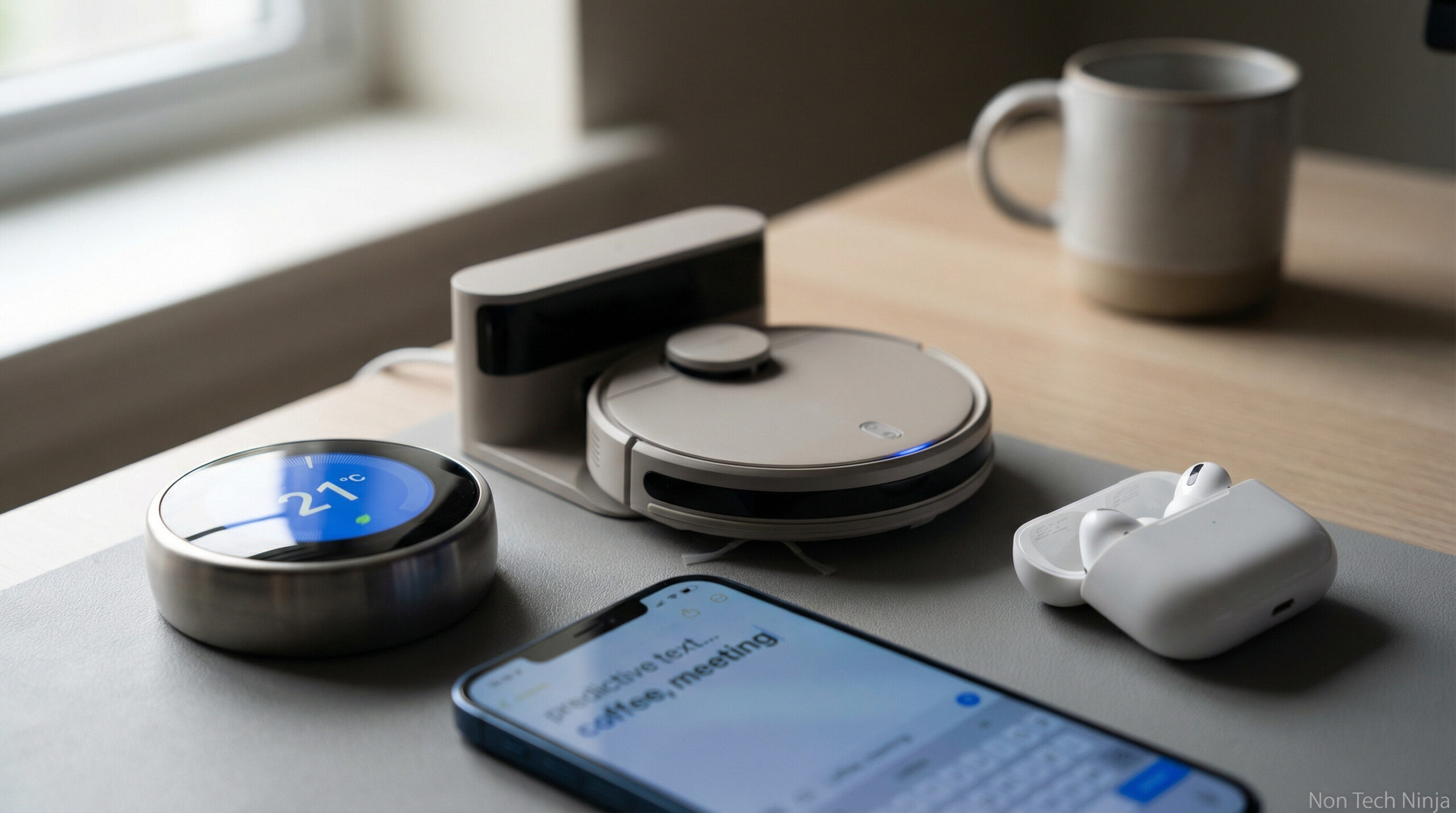
I’ve started to notice how much AI sits inside everyday stuff. My phone predicts what I type, my car reacts before I do, my home gadgets learn my habits, and apps guess what I want with strange accuracy. If something adapts, predicts, or keeps getting better without me training it, I assume there’s AI running quietly in the background.
Spot AI In The Products You Use Every Day
When Your Phone Feels One Step Ahead
I noticed it first on my phone. Everything moves faster than it should. Photos fix themselves. My keyboard knows the next word. Apps load in a snap. If a device predicts my moves, some AI is running the show. It’s subtle, but once you catch it, you can’t unsee it.
Smart Home Stuff That Watches Your Routine
My thermostat learned my schedule without asking. My fridge adjusts its cooling based on how often I open the door. These things don’t just run timers. They build patterns from what I do. When a device “remembers” your habits, that’s a clear sign that something more innovative is at work.
Cars That React Before You Do
Lane assist, brake help, parking help. These features react faster than any human. That’s the giveaway. If your car warns you before your brain even registers a problem, it’s reading the road with trained models, not simple sensors.
Shopping Apps That Learn Your Taste
I click on one item, and the app suddenly understands my style. It shows five more things that fit me too well. That kind of leap only happens when an algorithm studies patterns and builds a profile of what you’ll want next.
Streaming Apps That Guess Your Mood
I watch one crime show, and suddenly the app pushes dark dramas like I requested a whole theme pack. I didn’t. It just learned my preference from a few choices. When a platform acts like it knows your mood better than you do, there’s AI at work.
Spam Filters Saving Your Sanity
Most of the junk that tries to hit my inbox never shows up. A filter reads every message, understands what’s safe, and tosses the rest. It improves each week, even though I never touch a setting. Quiet AI, but powerful.
Robots That Get Smarter on Their Own
My vacuum used to get stuck in the same corner. One week later, it figured out the room and avoided the spot. No update. No input. It has just learned. Any device that improves on its own is a dead giveaway.
Customer Support That Replies Too Clean
Sometimes I chat with support, and the answers feel too polished. Too fast. Too tidy. Humans usually wander. AI doesn’t. You can feel the difference. When the tone is perfect but lacks a natural drift, you’re not talking to a person.
Music Apps That Match Your Pace
I pick one song during a workout, and the app builds a playlist that fits my speed. It’s almost spooky. It tracks patterns, tempo, and past choices. That’s a model guessing what keeps me moving.
Search Engines Filling In Your Thoughts
I type half a question, and it finishes it for me. That’s AI reading patterns from millions of searches. It predicts the rest based on what others asked.
Photo Tagging That Knows Your Friends
When an app suggests names for faces in group photos, that’s facial pattern learning. It didn’t memorize anyone. It studied past images and built a guess.
How I Spot AI Fast
I look for five simple signs.
| # | Sign |
|---|---|
| 1 | It predicts my next step. |
| 2 | It adapts without input. |
| 3 | It improves over time. |
| 4 | It reacts quicker than a human. |
| 5 | It knows my taste too well. |
Anything That Adapts Without Being Told
This is the big clue. If a product adjusts, predicts, or improves on its own, AI is inside. Devices don’t learn by accident. They know because they’re built to watch and react.
The Little Phrases Brands Use
Companies don’t always say “AI.” They slip in words like smart mode, auto adjust, or adaptive. When you see those on a box, you can assume there’s more going on behind the scenes.
Once you start seeing these clues, the whole picture changes. You realize how much of your day runs on small decisions made by systems you never meet. Not scary. Just real. And kind of impressive.
AI In Everyday Products – FAQ
Short answers to common questions about spotting AI in the products you use every day.
How can I tell if a product is using AI?
Do companies always say when they use AI?
Are all “smart” features powered by AI?
Should I worry about privacy with AI in my devices?
How common is AI in everyday products now?
AI shows up in places you don’t expect. If a device predicts your next move, adapts on its own, or keeps improving without you teaching it, AI is doing the work in the background. Once you notice the signs, you see them in almost every product you use.