

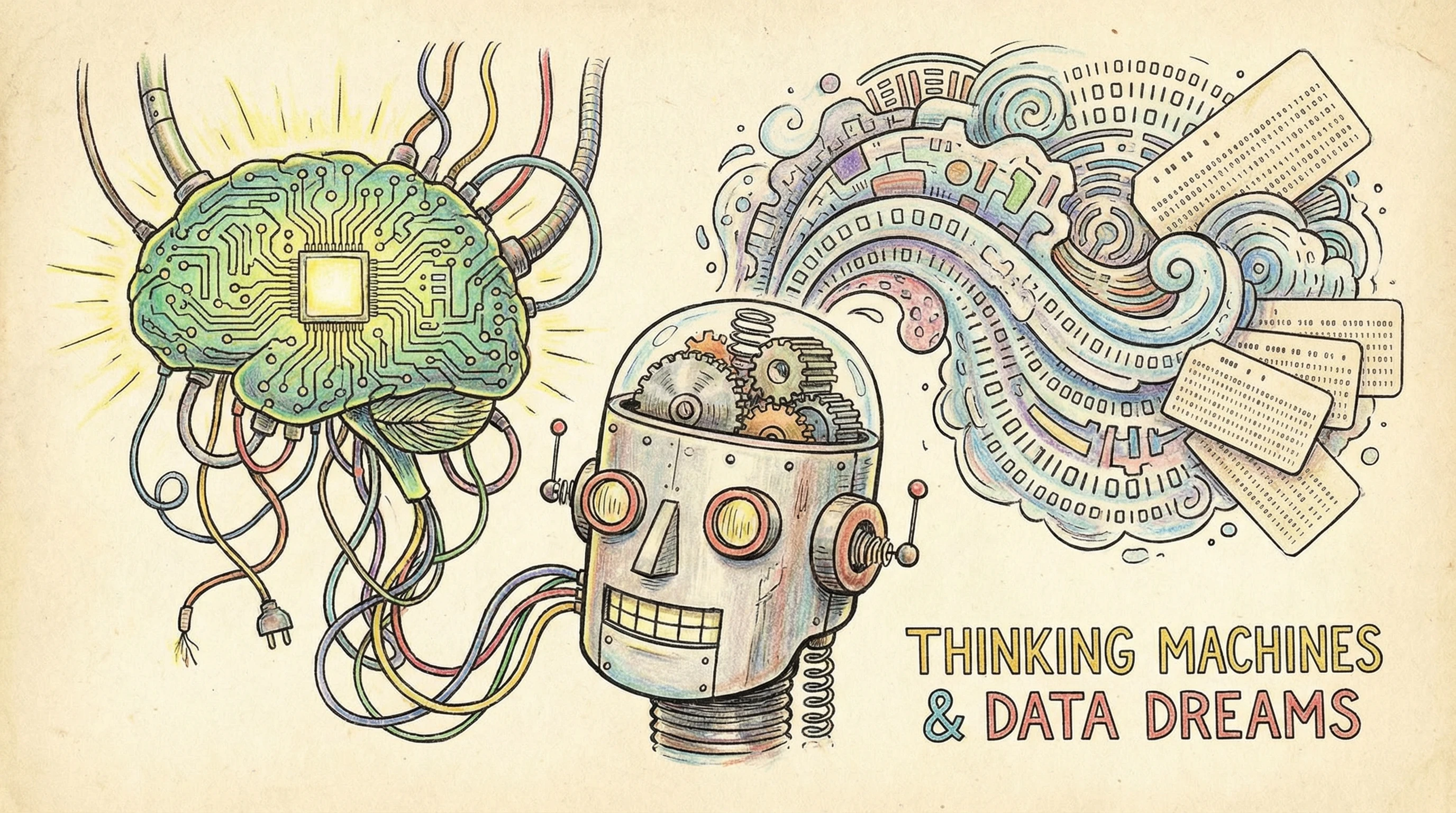
- What is Artificial Intelligence
- What Artificial Intelligence Means To Me
- How Does Artificial Intelligence Work?
- A Quick Glance At AI Types – From Basic to Brainy
- Why Everyone Keeps Talking About Artificial Intelligence
- Common AI Lingo – Quick Translations
- Learning AI Basics – What I Found Helpful Starting Out
- Things That Trip People Up When Learning About AI
- What AI Can Actually Do for Us (And Where It Stumbles)
- Popular Questions About AI – Here’s What People Usually Want To Know
- Where to Next? Getting Comfortable with AI in Real Life
TL;DR
Artificial intelligence is software that learns from data, spots patterns, and makes guesses or decisions without needing step-by-step commands from a human.
Most of what you use today is narrow AI: spam filters, recommenders, voice assistants, smarter cameras, and tools that clean up your writing or schedule.
AI is fast and useful, but not self-aware. It predicts more than it understands, so the real skill is knowing when to trust it and when to double-check.
What is Artificial Intelligence
If you toss the term “artificial intelligence” into a conversation, half the room will light up. The other half might get flashbacks to films with moody robots or wild stories about sentient computers. The reality is a lot less dramatic and a whole lot more useful, but also a bit slippery if you’re new to the subject. So what actually is artificial intelligence, and why does it seem to keep showing up everywhere, from your phone to your fridge?
What Artificial Intelligence Means To Me
The first time I met the term “artificial intelligence,” I figured it meant computers that could act like people; cracking jokes, holding grudges, probably struggling with Mondays. Funny enough, the simple version isn’t that different: artificial intelligence just means any kind of tech that can do things we usually count on humans for. Think about learning from experience, recognizing patterns, understanding language, or even coming up with new ideas.
What makes this area interesting is that nobody has really nailed down a single, official, permanent definition. If you travel back decades, a chess computer was considered AI. Now, that’s pretty much table stakes, nothing special. The game keeps changing as computers get smarter. My best summary: Artificial intelligence is about machines or software that can nudge, guess, decide, and fix problems without someone having to steer every single move.
How Does Artificial Intelligence Work?
You can picture AI as a collection of recipes; heaps of instructions, rules, and sometimes even guesses, telling a computer what to look for and how to react. The recipes got much more complicated over time. What started as “if X happens, do Y” has turned into letting the computer tune itself based on new information, almost like the world’s fastest, least-tired learner.
The best-known flavor today is called “machine learning.” Instead of only following hard rules, machine learning lets a computer practice on mountains of data; cat photos, financial chatter, weather stats, and pick up tricks along the way. Some AI doesn’t actually “think” at all; it just copies the patterns it finds. The results can feel pretty impressive, from self-parking cars to language translators that almost sound human. The trick is all about the data: more examples usually mean a smarter result.
A Quick Glance At AI Types – From Basic to Brainy
You’ll bump into a few main types of AI, each with different levels of “smarts.” On the simple end, there’s “narrow AI.” This single task specialist can recognize your voice, suggest what to binge next, or trade stocks. It does one thing really well, sticking to its lane like a bowling ball in a kids’ gutter guard game.
Then comes “general AI,” which is more a science fiction dream than something you’ll see in real life; tech with the same kind of flexible, creative intelligence that people use all day. We’re nowhere near this stage yet, unless you count movie robots. Somewhere in between, researchers tinker with stuff like emotional recognition, but even that stays light-years behind an actual brain.
Why Everyone Keeps Talking About Artificial Intelligence
AI shows up in everyday places, sometimes where you’d never think to look. When I use my phone’s camera, and it magically smooths my skin, that’s AI. When a shopping website floods me with things I mysteriously did want but never asked for, that’s AI too (sometimes helping, sometimes a bit too clever for comfort). Sometimes, you feel like you think about something, and it shows up in your feed somehow! Creepy!!!
Every day uses mess with the edges of regular life: smarter spam filters, chatbots that can handle customer questions at 2 a.m., maps that rethink traffic every minute. Whenever you see something that looks like tech “guessing” or “thinking ahead,” there’s a good chance AI powers it in some form. Even your email’s autocomplete guesses come from AI putting together what humans probably want to say.
Common AI Lingo – Quick Translations
If you wade into an article or a podcast about AI, get ready for a small parade of “buzzwords.” Here are a few I see all the time, with a bit of plain-English translation.
Algorithm: This is just a list of steps the computer follows. It could be simple or nearly impossible to read, but it’s still a recipe at its core.
Neural Network: Inspired by brains, but way simpler. This setup helps computers “connect the dots” within large datasets and identify patterns. Most modern AI uses a version of this.
Training Data: The mountain of examples; photos, sentences, or numbers; that an AI studies to get good at its job.
Deep Learning: When neural networks get more complex, they become “deep.” This powers stuff like speech recognition and those eerily good image generators.
Learning AI Basics – What I Found Helpful Starting Out
Most people figure AI is too complicated to poke around with, but some of my favorite tools and demos are built for beginners. Free apps can let you experiment with image recognition, voice assistants, or simple chatbots at home. Even just using the AI features in your phone, like voice-to-text, spam filters, or autocorrect, gives you an idea of the power (and the hiccups) you’ll find with the tech.
Open online courses and explainer videos make it possible for almost anyone to get their head around the basics. Some places to check out are Coursera, edX, and YouTube channels like Three Blue One Brown or Computerphile. No math degree required, just some curiosity and patience for a few wrong turns. For those who want extra hands-on practice, sites like Kaggle and Google Colab offer free ways to play with real datasets and machine learning projects.
If you’re more into reading, plenty of books break down the ideas behind artificial intelligence without piling on technical lingo. Titles like “AI Superpowers” by Kai-Fu Lee and “Life 3.0” by Max Tegmark help paint a picture of what’s possible, and what’s still science fiction.

Things That Trip People Up When Learning About AI
Trying to get a grip on artificial intelligence can feel like running into a fog. I mainly struggled with how easily the terms get mixed up or stretched. One day, “AI” meant an algorithm that sorts spam emails, the next it was used for a talking robot with snappy comebacks in a sci-fi show. The media loves drama, so the wildest stories crowd out the regular stuff.
Real World Skills
Knowing the basics of AI has made shopping online less annoying (thanks, ad blockers) and cut down my accidental double bookings with a smarter calendar. But learning where AI is hidden got me watching out for moments when I was being nudged or steered; recommendation engines work quietly behind the scenes, and some days that feels both cool and a bit eerie.
Lingo Soup
Terms like “algorithm,” “big data,” and “deep learning” pop up everywhere. It took me a while to realize that many of these just mean the computer is sorting, comparing, or practicing on tons of material. Not magic, just a pile of steps working very fast.
Predicting vs. Understanding
AI is pretty good at spotting patterns and making guesses based on them, but it doesn’t always know “why” anything happens. That’s why sometimes you get a playlist that gets your taste just right, except for that random polka song thrown in. Sometimes, the limitations are amusing, but they show that artificial intelligence isn’t truly thoughtful or self-aware.
What AI Can Actually Do for Us (And Where It Stumbles)
For me, the best stuff powered by AI ends up helping out quietly; cutting down spelling mistakes, nudging daily schedules, keeping voice assistants from mangling my calendar invites. AI still fails a lot, like when your smart speaker mixes up your commands or your navigation reroutes you through a cornfield. It’s learning, just not fast enough to avoid a few wobbles or embarrassing blunders.
The smart part is knowing when to trust AI and when to double-check. I wouldn’t let a chatbot run my bank account solo, but I’ll let it handle sorting my email or setting smart reminders for dentist appointments. That practical balance comes from seeing what works and what goes sideways now and then. It helps to check in with updates and privacy settings, since new features are always rolling out, and sometimes things can change without warning.
AI is starting to show up in medicine, financial planning, and even art. For example, doctors use AI to help spot early signs of disease, artists use AI tools to whip up new designs or get feedback, and language learners use chatbots to practice speaking. Each time, the results get better as people track down what helps and what doesn’t.
Something to think about is that AI is getting so good at creating images that we have issues telling what is Real and what is fake. I wrote an article about this. You can check it out here=> What is SynthID
Popular Questions About AI – Here’s What People Usually Want To Know
If you’re just dipping a toe into AI or trying to explain it to a friend, here are some popular things people always ask me.
So, will artificial intelligence replace people at work?
Some jobs get easier or faster with AI, but most things still need a human touch. Routine tasks might mix it up, while totally creative or people-centric work usually sticks with us for a while yet.
Is AI going to be smarter than people soon?
Smart at some stuff, yes (like memorizing billions of facts). Creative, flexible, and emotionally aware? Not yet. People still win at common sense and reading the room.
How do I know when I’m using AI?
If an app is guessing, learning, or improving based on lots of experience, even if it’s just ordering groceries or correcting typos, AI is behind the scenes making it tick.
Can I try building my own simple AI?
Absolutely. There are tons of tutorials online that guide you through making a simple chatbot or image recognizer, even if you don’t have programming experience. Websites like Code.org, Scratch, and online coding camps help you get started with basic concepts. Don’t worry if your project is a little silly—experimenting is part of learning. As AI tools get more user-friendly, these projects are becoming more fun and accessible.
Where to Next? Getting Comfortable with AI in Real Life
If you start looking around, AI hangs out just below the surface almost everywhere, from doctors using it to spot weird lumps in scans, to your favorite music app making Friday night playlists. A little knowledge goes a long way: not just to keep up, but to spot when you’re being nudged and decide whether it’s a help or a hassle.
It’s rarely the robot apocalypse or the perfect personal assistant. For now, it’s more about finding fun, messy, sometimes brilliant ways to get things done a little quicker, and sometimes a little weirder than before. If you keep asking questions and playing with new tech, you’ll find plenty of surprises and a few eye-catching moments along the way. Bottom line: keep your curiosity fired up and let the next adventure in artificial intelligence keep you on your toes.
Key Takeaway
Artificial intelligence is not magic or mystery. It is software that learns from data, spots patterns, and makes useful guesses so you can work faster—while still staying in control.







Hi Michael,
I spent too many years in the restaurant industry before becoming a blogger, and now I am using AI to help me expedite service to my new customers. To me, the knowledge of AI or Artificial Intelligence is like making a good stew; you throw in this from here, that from there, and if done right, it comes out tasty and piping hot; if not, your restaurant closes, and you have more time for blogging the old way.
The fact is that not all ingredients in AI or Stews are created equal. There are grocers who sell bad onions and idiots who put fake news on the internet just to see who is fact-checking this thing called the Information Super Highway. If the cook, or in our case bloggers, don’t check their ingredients, we are as guilty as those putting bad info into AI in the first place. AI should work with us and not be us. It’s an extension of the minds of humans, not a replacement program for everything that makes us unique.
Hello Andy,
Great analogy and perfect insights on exactly what AI is. This has to be one of the best breakdowns I have read in a while and I appreciate you taking the time to leave it behind.
Michael
Clear intro for non-technical readers. From my side, AI became useful the moment I treated it like a junior teammate, not a magic box. As a DevOps engineer, I use it to draft incident postmortems, summarise ugly logs, and outline runbooks faster. As a creator, it helps me script short videos, repurpose blog posts, and A/B test captions without losing my voice. The pattern that works is simple: define the task tightly, feed small real examples, ask for one shot, then verify with my own checks. Hallucinations drop, output quality rises, and I keep a human-in-the-loop for anything that touches customers or systems.
Two habits paid off big: a “prompt library” for repeat tasks and a red-team pass where I ask the model to argue against its own answer. That combo turns AI from a novelty into a dependable part of my workflow.
Marios
Hello Marios,
Get insights and uses that you have highlighted here in your comments. Thanks for taking the time to leave them behind.
You made a great point about a prompt library. It is a topic on my content calendar that will be dropping soon. Be sure to check back. Until then, have a great day!
Michael
Thanks for sharing your insights and understanding of AI. I find it helpful to do some routine tasks, which then allow me to concentrate on more important issues. I always edit and review the results I obtain from AI. You have made many good points here, and I will save your article to share with others.
Hello Joseph,
I thank you for taking the time to leave behind your thoughts and insights. AI is evolving rapidly, but it will never be human although there may be a point when it attempts it. It will always lack the human touch. Good day to you.
Michael
Hi Michael, AI is becoming a big part of what I do these days. Its probably given me a bit of a spark to get back to work on my websites again. Maybe I probably use it a bit too much these days which I guess is a bit of a problem – thinking about what AI is actually capable of does make me think how long I’ve actually got to make my money from blogging if I do. But for now it is great for editing old posts and setting up things like social media posts and email autoresponders. Also, some of these AI image generators have been getting really good recently. Amazing really but yes should we be worried I guess is the question.
Hello Alex,
Thanks for providing your insights with me. I look at AI in a different way. I agree it as it stands now is great and very helpful to our current workflow.
Now then, our opinions differ when it comes to the future of AI. Yes, it is evolving rapidly, which is why training, like that offered by Wealthy Affiliate, and other training platform are changing the way we do things. We are currently learning skills to adapt to the changes AI is currently making now and our future. It is up to us to learn and adapt or be left behind.
Thanks for stoping in.
Michael